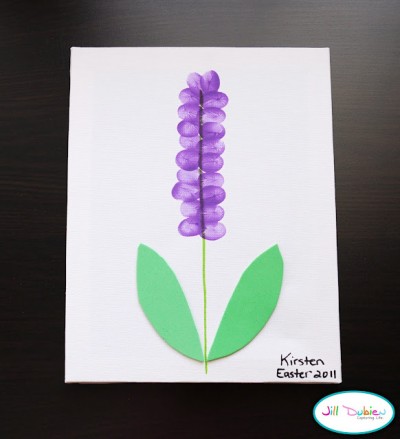
Perfect for Mother's Day Cards, or just a simple afternoon activity, these quick and easy crafts use just the basic supplies and will help spread spring fever!
1. Thumbprint Hyacinth
2. Muffin Liner Flower Garden
3. Hand/Foot Print Flowers
4. Tissue Paper Flowers
5. Buttons and Book Pages
Sunday, April 28, 2013
Thursday, April 25, 2013
5 Ways to Stop Yelling!
When your child is driving you crazy, it can feel as if they are always misbehaving. Instead of losing your cool, check out Parent's 5 ways to stay calm while still making your point and setting necessary boundaries.
1. Breathe
Inhale. Exhale. Repeat. Sometimes all it takes is a moment to cool down.
2. Address the Behavior
We all have good kids; sometimes their behavior just stinks. When you're teaching your children to ride their bikes, do you punish them when they don't get it the first try? Of course not. You encourage them, support them, and give them guidance. Remember that positive behavior is learned, and yelling is not necessarily an effective teaching tool.
3. Mean Business Without Being Mean
Instead of yelling, use a firm, but soft, I-mean-business tone when giving behavior directions.
Direction that makes the most impact on a child is actually one that is stern and even somewhat gentle. When you speak in a calm but firm soft voice, children have to work to listen -- and they most always do. The calmer and softer you speak, the more impact your words will have. Not only will your child most likely grasp your instructions faster, you won't have to lose your voice trying to convey it.
4. Help Your Child Explain Feelings
Before you lose your cool because your child has misbehaved, figure out what is causing the behavior.
Our goal as parents should be to teach our children how to effectively express themselves by validating their feelings without validating their behavior.
5. Put Yourself in Their Shoes
Are you hurt when someone yells at you? Of course; so why wouldn't your child be?
Our goal as parents should be to teach our children and to build them up, not to tear them down. When we yell at our children we risk damaging their self-esteem and sense of self-worth. Consider how you'd feel if your boss yelled at you. You'd likely be embarrassed and hurt. Often you don't have a chance to process what your boss is saying because of how it was said. The same goes for your child. You want to be able to teach him what is acceptable and what is not without making him feel shame or embarrassment.
1. Breathe
Inhale. Exhale. Repeat. Sometimes all it takes is a moment to cool down.
2. Address the Behavior
We all have good kids; sometimes their behavior just stinks. When you're teaching your children to ride their bikes, do you punish them when they don't get it the first try? Of course not. You encourage them, support them, and give them guidance. Remember that positive behavior is learned, and yelling is not necessarily an effective teaching tool.
3. Mean Business Without Being Mean
Instead of yelling, use a firm, but soft, I-mean-business tone when giving behavior directions.
Direction that makes the most impact on a child is actually one that is stern and even somewhat gentle. When you speak in a calm but firm soft voice, children have to work to listen -- and they most always do. The calmer and softer you speak, the more impact your words will have. Not only will your child most likely grasp your instructions faster, you won't have to lose your voice trying to convey it.
4. Help Your Child Explain Feelings
Before you lose your cool because your child has misbehaved, figure out what is causing the behavior.
Our goal as parents should be to teach our children how to effectively express themselves by validating their feelings without validating their behavior.
5. Put Yourself in Their Shoes
Are you hurt when someone yells at you? Of course; so why wouldn't your child be?
Our goal as parents should be to teach our children and to build them up, not to tear them down. When we yell at our children we risk damaging their self-esteem and sense of self-worth. Consider how you'd feel if your boss yelled at you. You'd likely be embarrassed and hurt. Often you don't have a chance to process what your boss is saying because of how it was said. The same goes for your child. You want to be able to teach him what is acceptable and what is not without making him feel shame or embarrassment.
Saturday, April 13, 2013
Let's Go Fly a Kite
For a great on-line activity that really works, we were thrilled to find this easy paper kite from the blog "Maya Made." Using only the most basic of household supplies, and a few quick minutes, you can whip out a toy that will thrill for hours!
Supplies for one kite:
- sheet of 8 1/2"x11" paper (I used bright colored printing paper)
- markers for optional decorating
- 8"bamboo BBQ shishkabob stick (skewer)
- a plastic grocery bag
- scotch tape
- 6-10 feet of string
- scissors and a hole punch
- 1"x 3" piece of cardboard for winding string
Instructions:
1. Decorate paper and then fold in half to get 8 1/2"x 5 1/2".
3. Fold back one side to form the kite shape and place a piece of tape along the fold line.
4. Place skewer from one end to another and tape well.
5. Cut a inch wide spiral out of your grocery bag...6-10 feet long. Tape it to the bottom of the kite.
6.Flip kite onto it's back (flat side with skewer) and fold front flap back and forth until it stand up straight.
7. Punch hole in the front flap about a 1/3 of the way down from the top.
8.Tie one end of string to the hole and wind the other end onto the cardboard string winder.
You're all set... hold the kite up for launching and run several yards with your child to get it going. We didn't even need a breezy day to get our kite up in the air...yippee!
Sunday, April 7, 2013
Rainy Day Craft
If the spring weather has you trapped inside, try this fun, easy coffee filter umbrella craft! They are easily made with supplies already in your house and look great hanging in a window or glued down to a piece of construction paper.
Materials
Coffee Filters
Markers (washable work best)
Spray Bottle with water
Pipe cleaners or construction paper
Tape
Procedure
1. Cut coffee filters in half (1 will make 2 umbrellas)
2. Decorate with makers. It doesn't matter if you use designs or just scribbles....anything goes!
3. Spray with water to let colors bleed across filter (you may want to have something under your filter when you do this to prevent leak through onto the table)
4. Allow to dry.
5. Use a pipe cleaner or construction in paper to make a handle. Tape to the filter!
6. Hang in a window or on a piece of construction paper!
Sunday, March 31, 2013
Letting Kids Choose What They Wear
Is your child laying down the law about her clothing choices? Don't let it ruin your mornings! Try these quick tips from Parent Magazine to get out of the house with less stress!
Provide Choices
Most 3- to 4-year-olds are wannabe dictators, grasping for control wherever they can. So whenever possible, let 'em have it. For example, ask, "Would you rather wear your blue sweater or your red one?" Having a say will make him less likely to dig in his heels.
Allow for Taste
Do you hate wool? Can't stand too-tight tank tops? It's likely your kid will have her own likes and dislikes too. Within reason, try to be flexible about her preferences. And if she wants to wear dresses every day -- well, why not? If you're worried about her being cold, you can always layer warm leggings or a T-shirt underneath.
Take Time to Practice
By age 3, most children can handle the basics of getting dressed, such as pulling on underwear, elastic-waist pants, and a sweatshirt. (Trickier tasks, like threading a zipper or doing buttons, may come later.) So even if it's slow going, let your kid dress herself as often as you can, especially on those weekend mornings when there's no need to rush. "The more you can give her the power to dress herself, the less of a struggle it will be," says Dr. Levine.
Make It a Race
Of course, preschoolers don't feel the same urgency to get out the door that you do in the morning. They'd rather play with Legos or watch Go, Diego, Go! than get dressed. With that in mind, turn dressing into a game. Say, "I'll close my eyes and see how long it takes you to put on your shirt and pants." Or set a timer for ten minutes and reward your kid with a sticker if he gets downstairs before the buzzer goes off. You can also give him a poker chip for each good performance and allow him to trade them in for a treat when he has five chips.
Plan Ahead
Kids this age love looking at photos of themselves. Use this to your advantage by making a step-by-step picture guide of your child's morning activities. It could show her waking up, getting dressed, brushing her teeth, and eating breakfast. Hang it in her room, where she can follow it each day.
Let Him Chill
Ah, the winter-coat struggle. Your child isn't cold inside, so why the heck would he want to put on that bulky, sweaty jacket and cover his perfectly warm-enough outfit? But he will feel different when he gets outside. Unless it's truly freezing, don't sweat the situation, says Dr. Levine. Just carry his coat and let him go out as is. "If he's chilly, he's going to ask you for it," Dr. Levine says. "Then next time, you can gently remind him of how cold he was." Chances are, your child will welcome the coat and gloves long before his fingers go numb.
Tuesday, March 26, 2013
Keeping Your Family Strong
Every family has strengths, and every family faces challenges. When you are under stress-the car breaks down, you or your partner loses a job, a child's behavior is difficult, or even when the family is experiencing a positive change, such as moving into a new home-sometimes it takes a little extra help to get through the day. Protective factors are the strengths and resources that families draw on when life gets difficult. Building on these strengths is a proven way to keep the family strong and prevent child abuse and neglect. These tips, provided by the the U.S. Department of Child Welfare describe some of the protective factors and some simple ways you can build these into your own family.
Protective Factor #1: Nurturing and Attachment- Our family shows how much we love each other
Strategies:
Strategies:
Protective Factor #3: Social Connections- I have family, friends and neighbors who help me out and provide emotional support
Strategies:
Protective Factor #1: Nurturing and Attachment- Our family shows how much we love each other
Strategies:
- Take a few minutes at the end of each day to connect with your children via a hug, a smile, a song or a few minutes of just listening and talking
- Find ways to engage your child while completing everyday tasks (meals, shopping, driving in the car). Talk about what you are doing or play simple games such as "I Spy"
Strategies:
- Take a quiet time to re-energize: Take a bath, write, sing, laugh, drink a cup of tea
- Do some physical exercise: Walk , stretch, do yoga, lift weights
- Share your feelings with someone you trust
Protective Factor #3: Social Connections- I have family, friends and neighbors who help me out and provide emotional support
Strategies:
- Join a playgroup or on-line support group of parents with children of similar ages
- Find a church, temple or mosque that welcomes and supports parents
- Participate in neighborhood and community activities such as lunch in the park, outdoor concerts, street fairs, farmer's markets and potlucks
Sunday, March 24, 2013
Celebrate Spring in the Kitchen
Needing a sweet treat?!? These easy and adorable desserts not only taste great, but are a fun way to celebrate the coming of spring. Have kids help add the ingredients (be careful of the hot stove) and place the eggs in the nest.
Ingredients
2 cups milk chocolate chips
2 Tbs smooth peanut butter (optional)
1 bag chow mein noodles
Candy to use as "eggs" (jelly beans, mini eggs, etc)
Directions
1. Using double boiler, or the microwave, melt the chocolate chips and peanut butter until smooth (stirring occassionally)
2. Add noodles and stir to coat
3. Place on wax paper in nest shapes and place "eggs" in nests
4. Allow to cool and set
Subscribe to:
Posts (Atom)
